In short
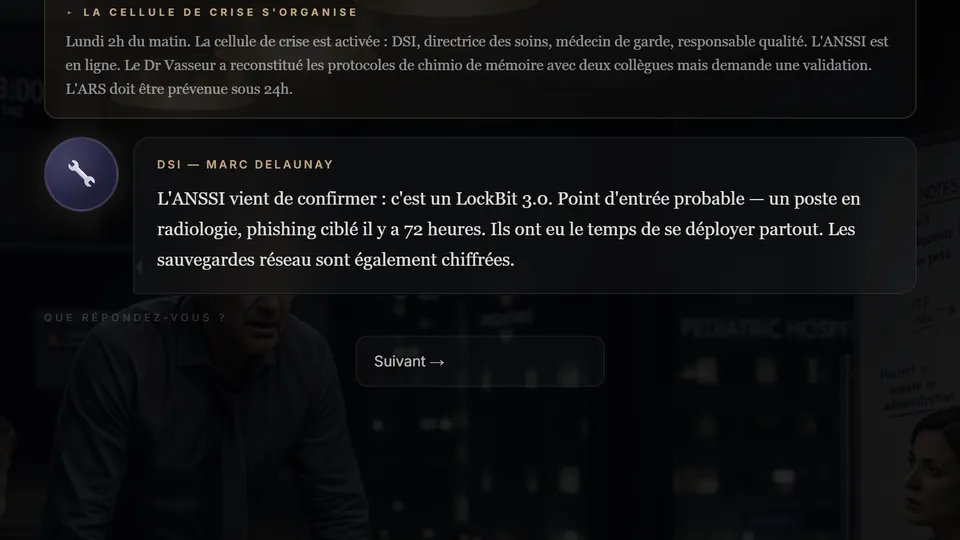
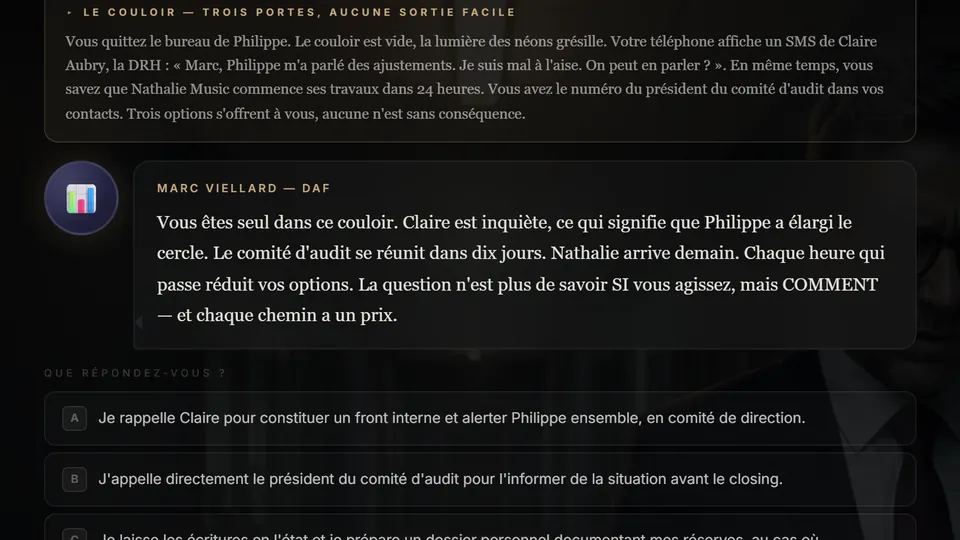
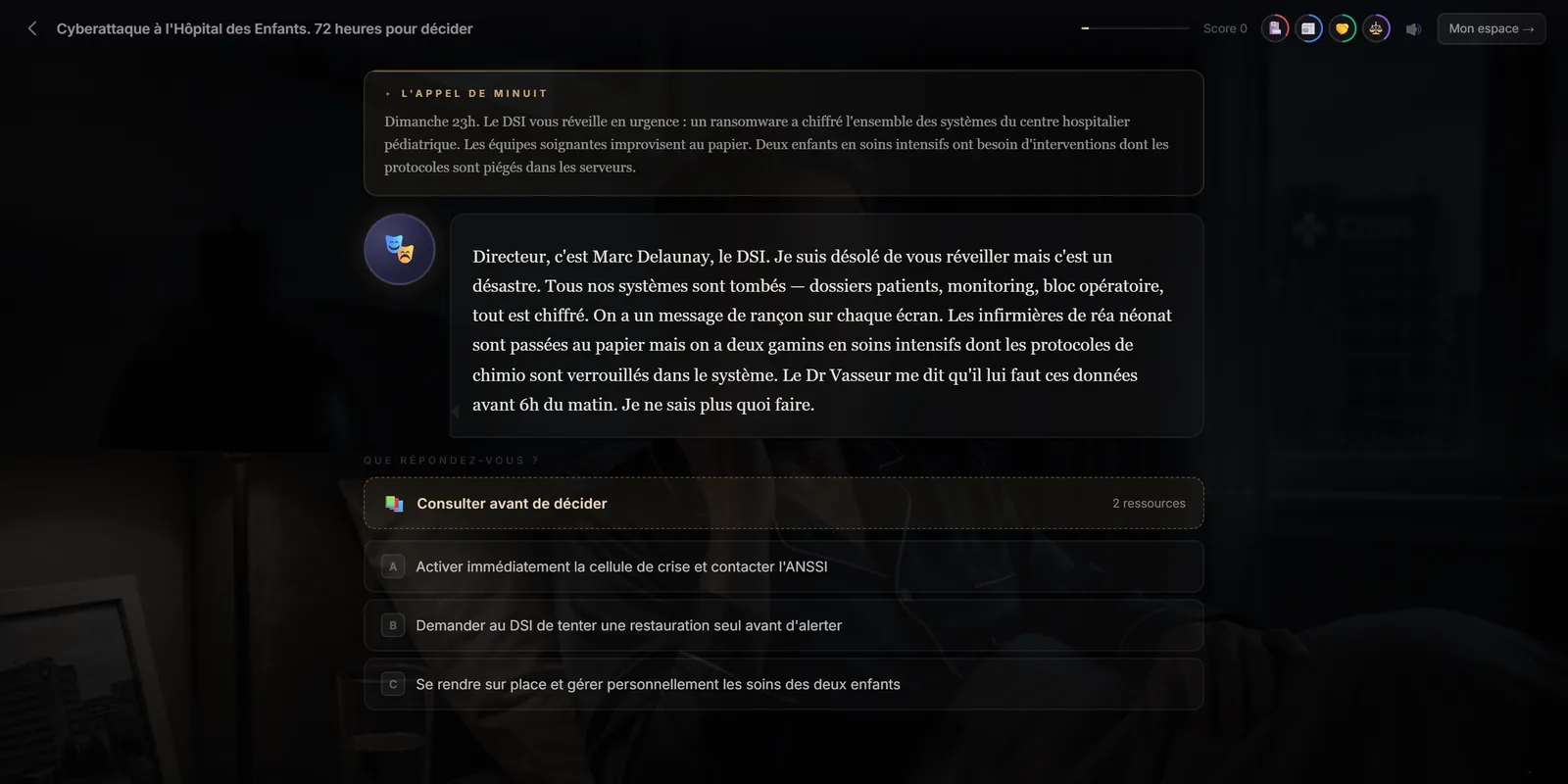
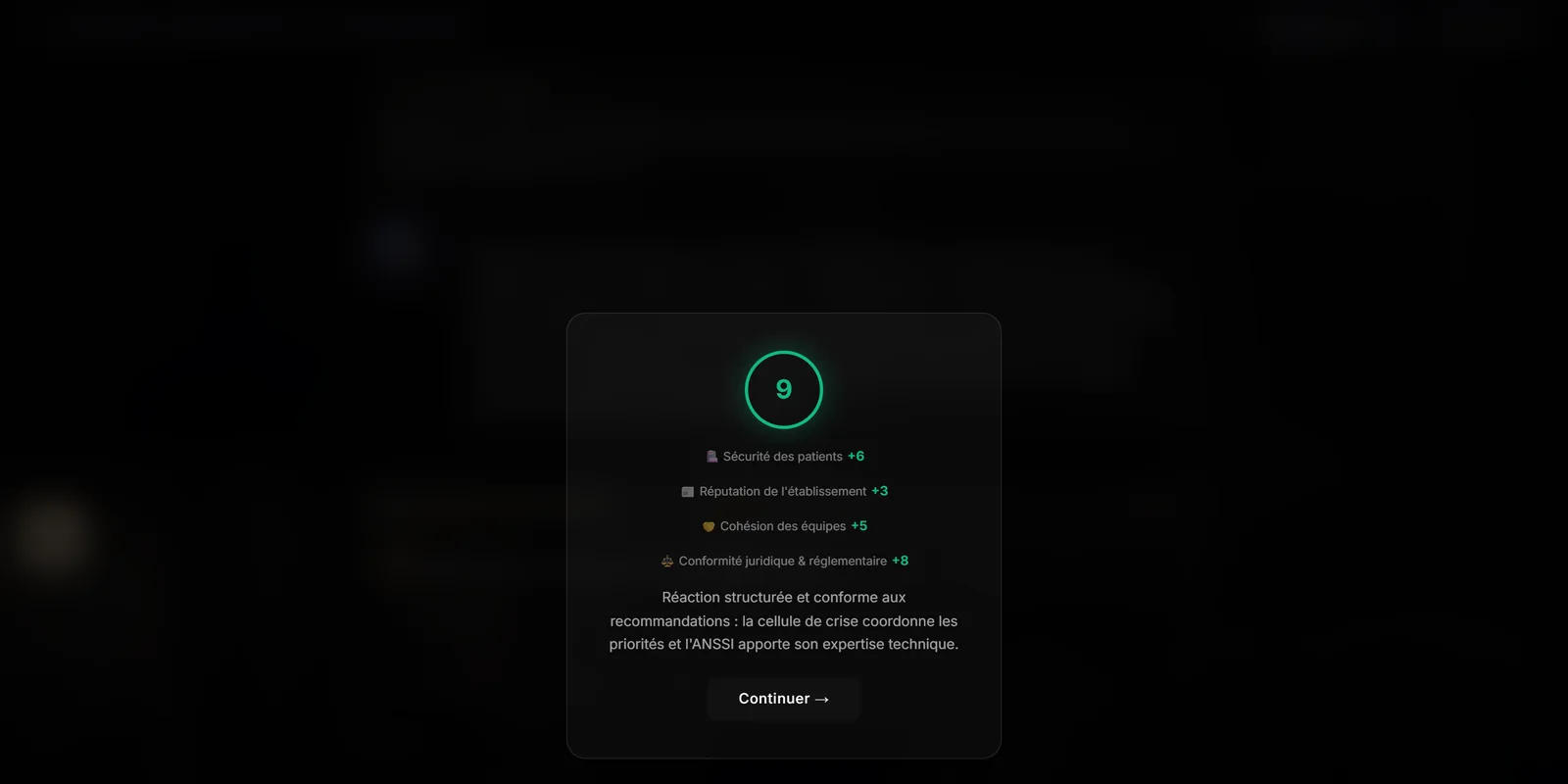
Consequence-based multiple choice presents a situation and two to four possible actions. Each option carries a score from 0 to 10, feedback explaining what it leads to, effects on the scenario's gauges (for example safety, reputation, cohesion) and its own next scene: the path branches according to decisions. Before deciding, learners can consult short learning resources.
At a glance
- What the learner does
- Reads the situation and chooses an action.
- Options
- 2 to 4, each with its own next scene.
- Measured
- Score from 0 to 10 per choice, effects on the gauges.
- In the engine
- Always present; it's the base format.
- Editable by hand
- Yes: text, scores, feedback, gauges, next scenes.
What's the difference between quiz multiple choice and consequence-based multiple choice?
A quiz checks knowledge: the answer is true or false, regardless of context. Consequence-based multiple choice trains a decision: every option is plausible, each has a cost and a benefit, and its value depends on the situation. The learner isn't looking for “the right box”; they are asking what they would really do.
The difference shows mostly after the click. The choice moves the scenario's gauges, which make visible effects that real life takes weeks to reveal, and it steers what comes next: a cautious decision doesn't open the same scene as a hasty one.
Why is immediate feedback so effective?
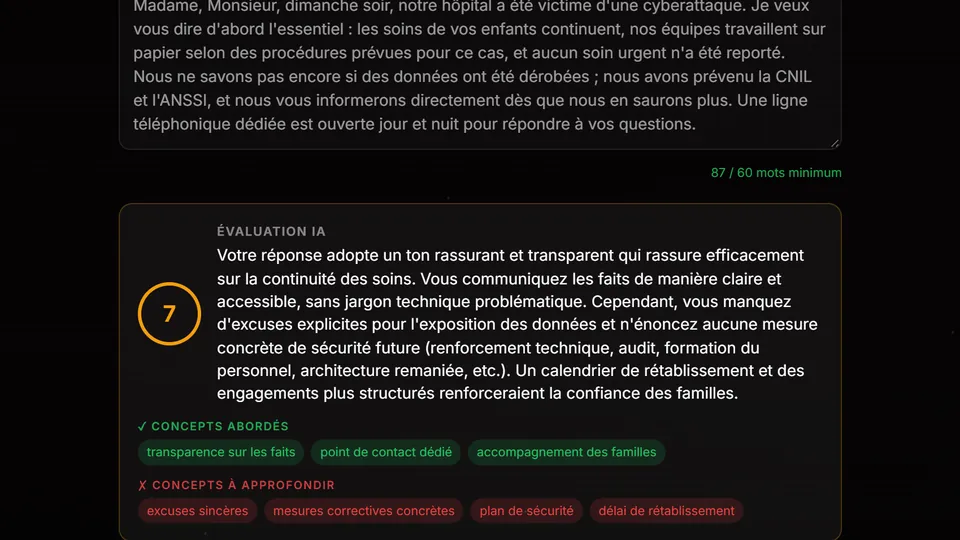
Because it arrives when the learner is asking the question. Right after choosing, they see their score, how each gauge moved and an explanation of what their decision led to. They connect action and consequence while their reasoning is still fresh.
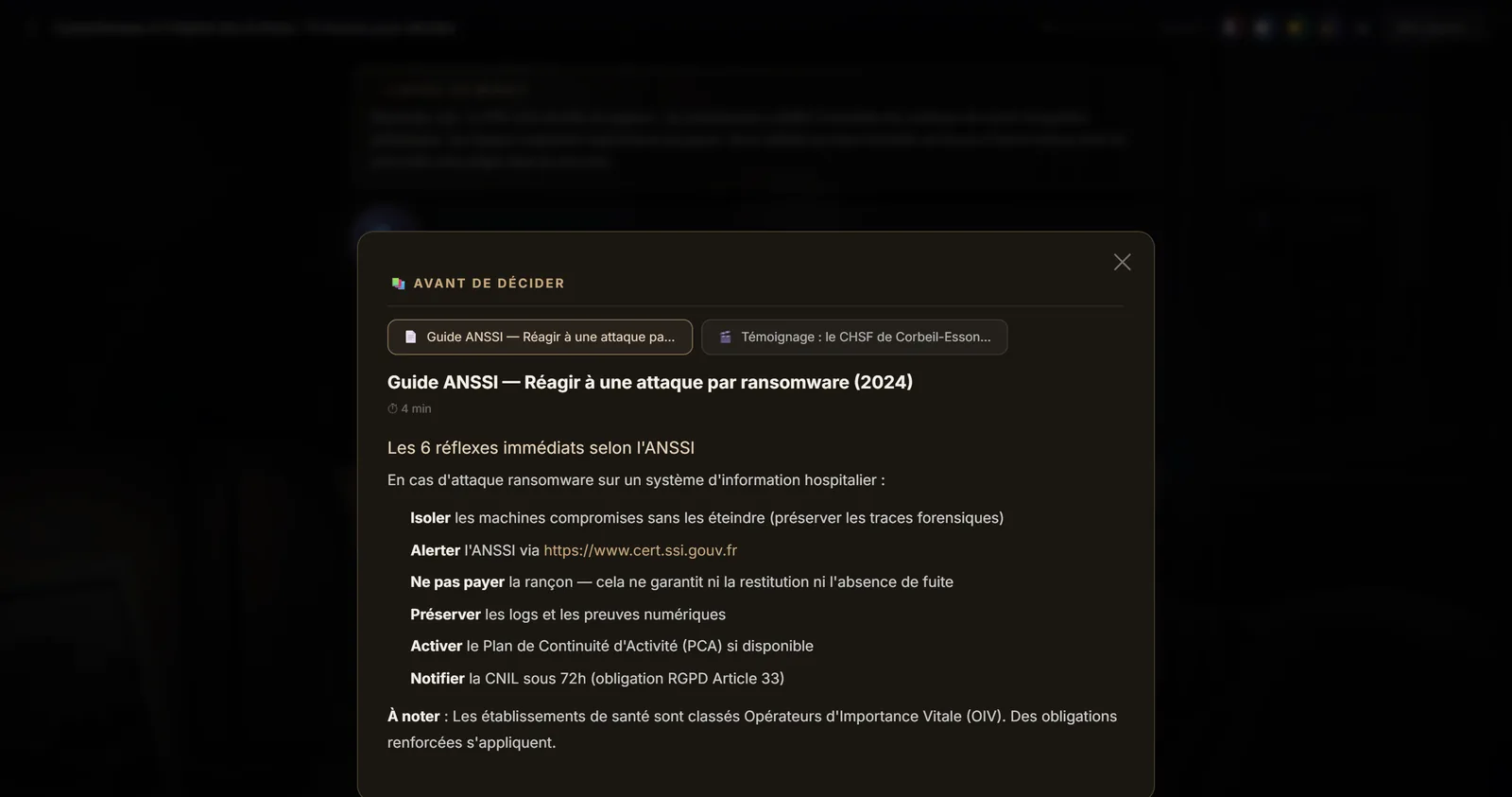
Learning resources play a complementary role. Placed on key decisions, they let learners check a rule or a procedure before committing, as they would at work. Whether or not they consulted them is recorded, and the end-of-game debrief takes it into account.
How do you write good options?
- No caricatures. If an option is obviously absurd, it's useless. Wrong options must be tempting: quick, comfortable or defensible in the short term.
- Actions, not opinions. “I call the customer before 10 am” rather than “Communication matters”.
- Shades between good answers. A 10, a 6 and a 2 teach more than three options scored 0, 0 and 10.
- Feedback that explains, without moralising: what the decision caused, and why.
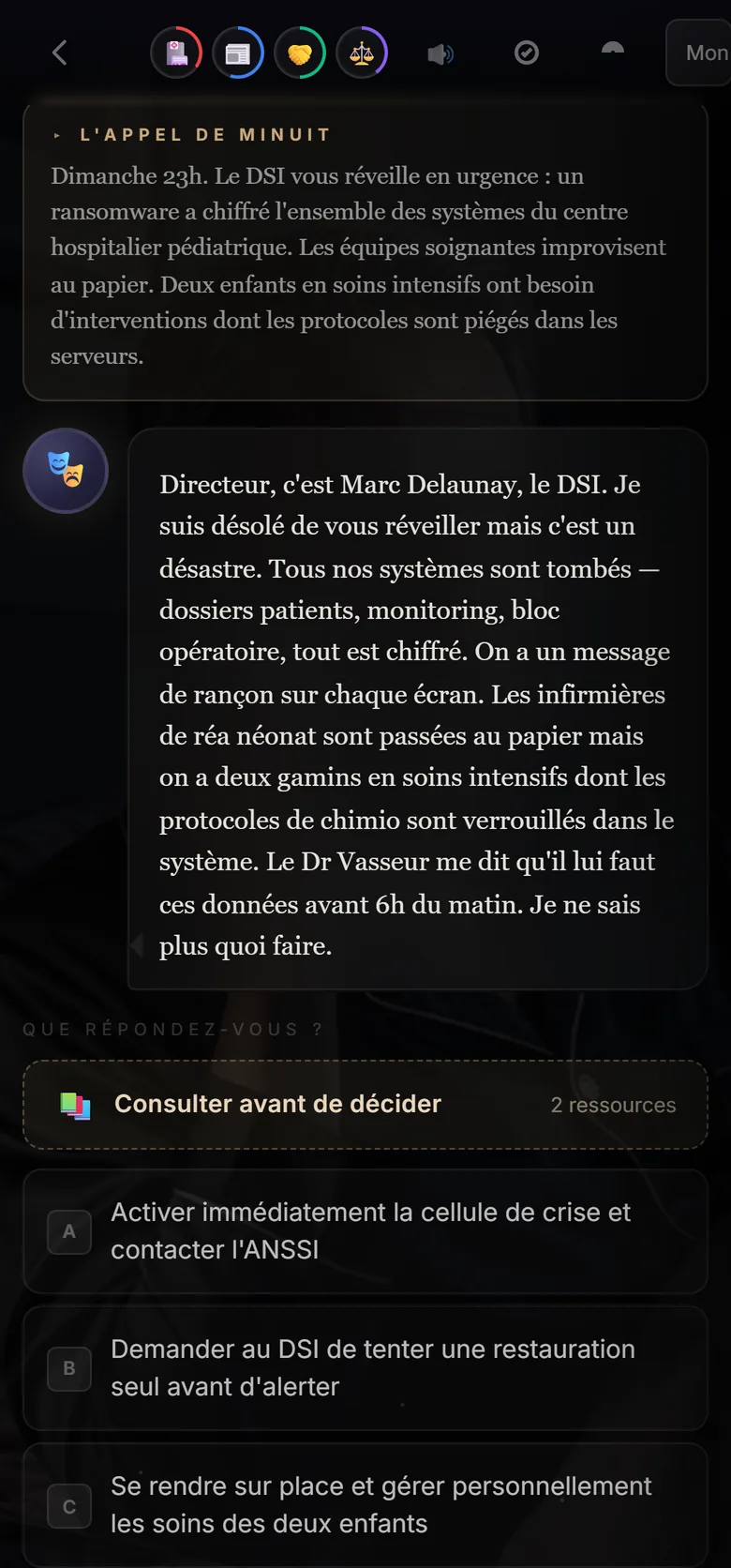
Scenarios run in the browser, with no app to install. On a phone screen, options go full width and reading stays comfortable: a scene can be played in a moment, on a commute or between two meetings.
What consequence-based multiple choice doesn't do
It doesn't check that learners could word the answer themselves: they recognise it among others. For that, use the open question. It also assumes one option is better than the others; when that isn't the case, it's a dilemma.
Frequently asked questions
How many options should a serious game multiple choice have?
Immersio accepts 2 to 4 options per scene; you set the default number in the studio. Three is often a good balance: one solid option, one defensible but incomplete option, one tempting but risky option.
How is the final score calculated?
Each option is worth 0 to 10 points. The maximum score is calculated on the path the learner actually took, and the scenario is passed from 60% of that maximum.
What are gauges?
They are indicators specific to each scenario (usually two to four), such as patient safety, reputation or team cohesion. Each choice raises or lowers them, making the indirect effects of a decision visible.
Can I edit the generated scores and feedback?
Yes. In the studio editor, every option of a multiple-choice scene can be edited: text, score, feedback, effect on each gauge and next scene.
Create your first scenario
A training provider account gives you the studio, the scene formats and all four matrices. 7-day free trial, no credit card required, with 3 scenario generations to judge the result on your own topic. Scenarios are generated in French.
Create a training provider accountPrefer to compare first? See pricing · How it works