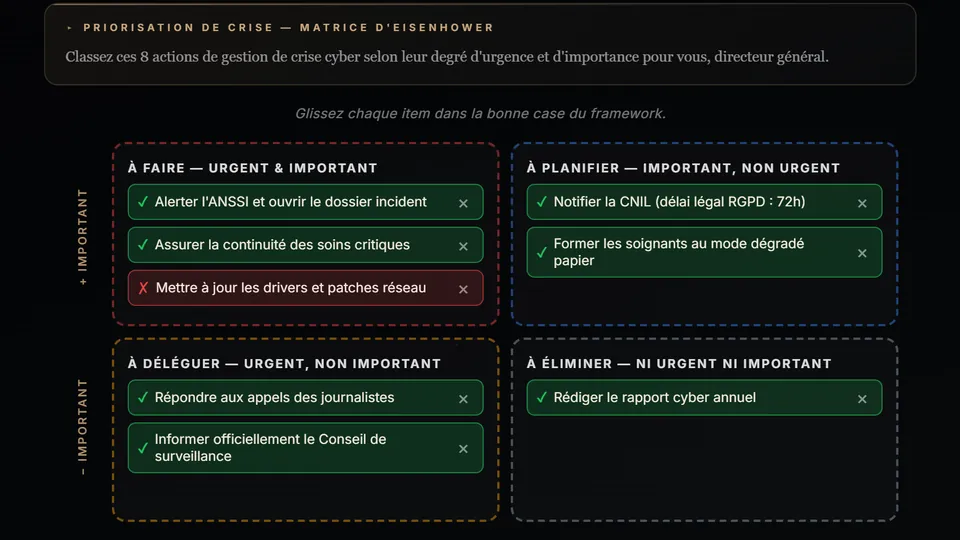
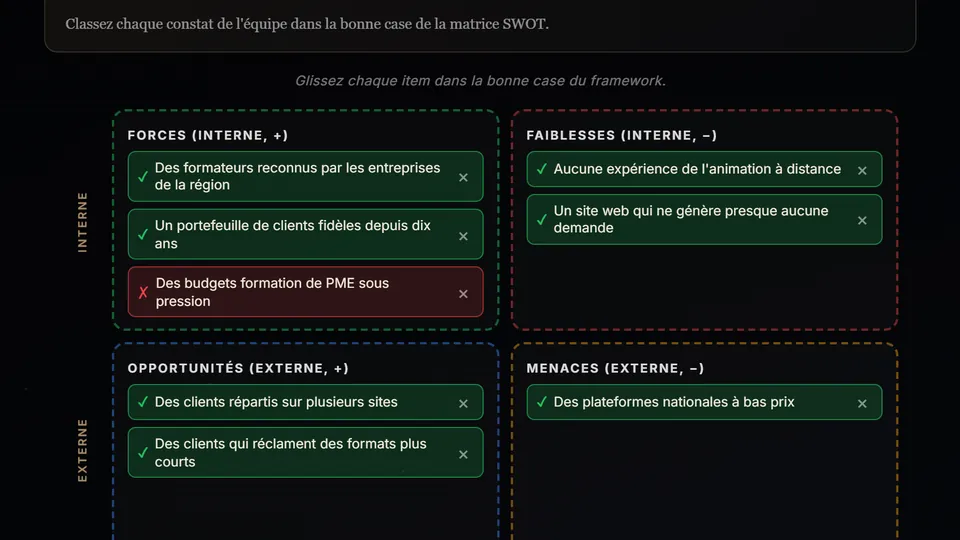
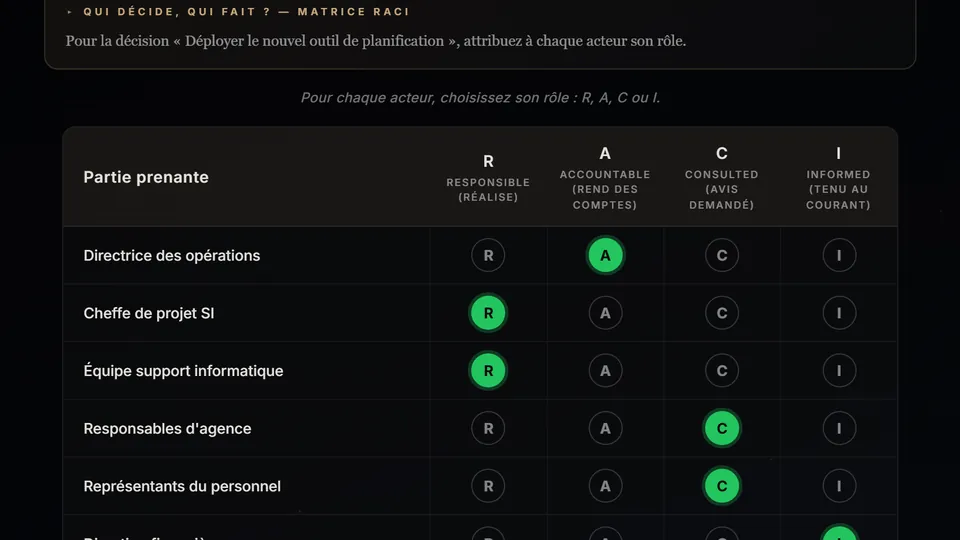
In short
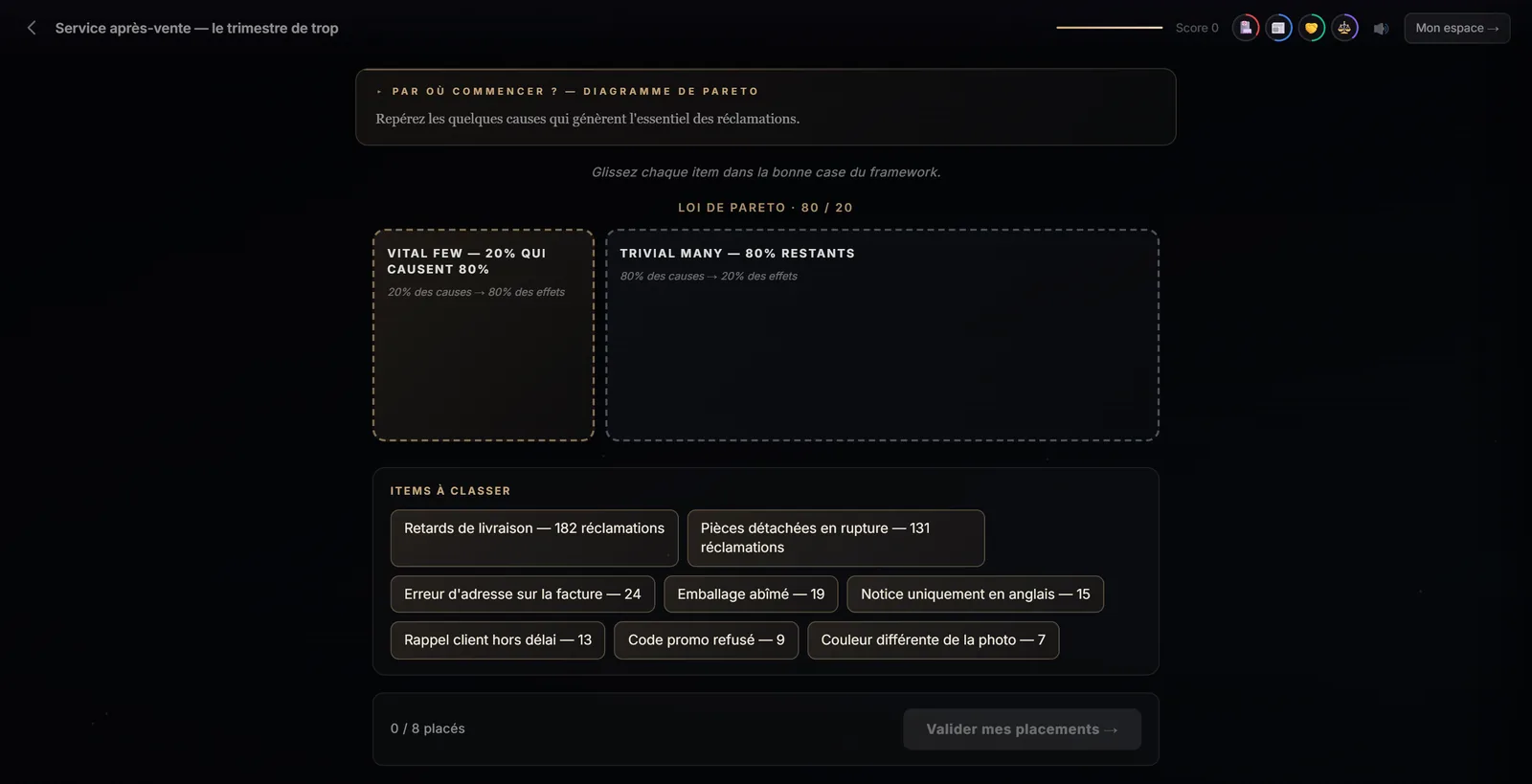
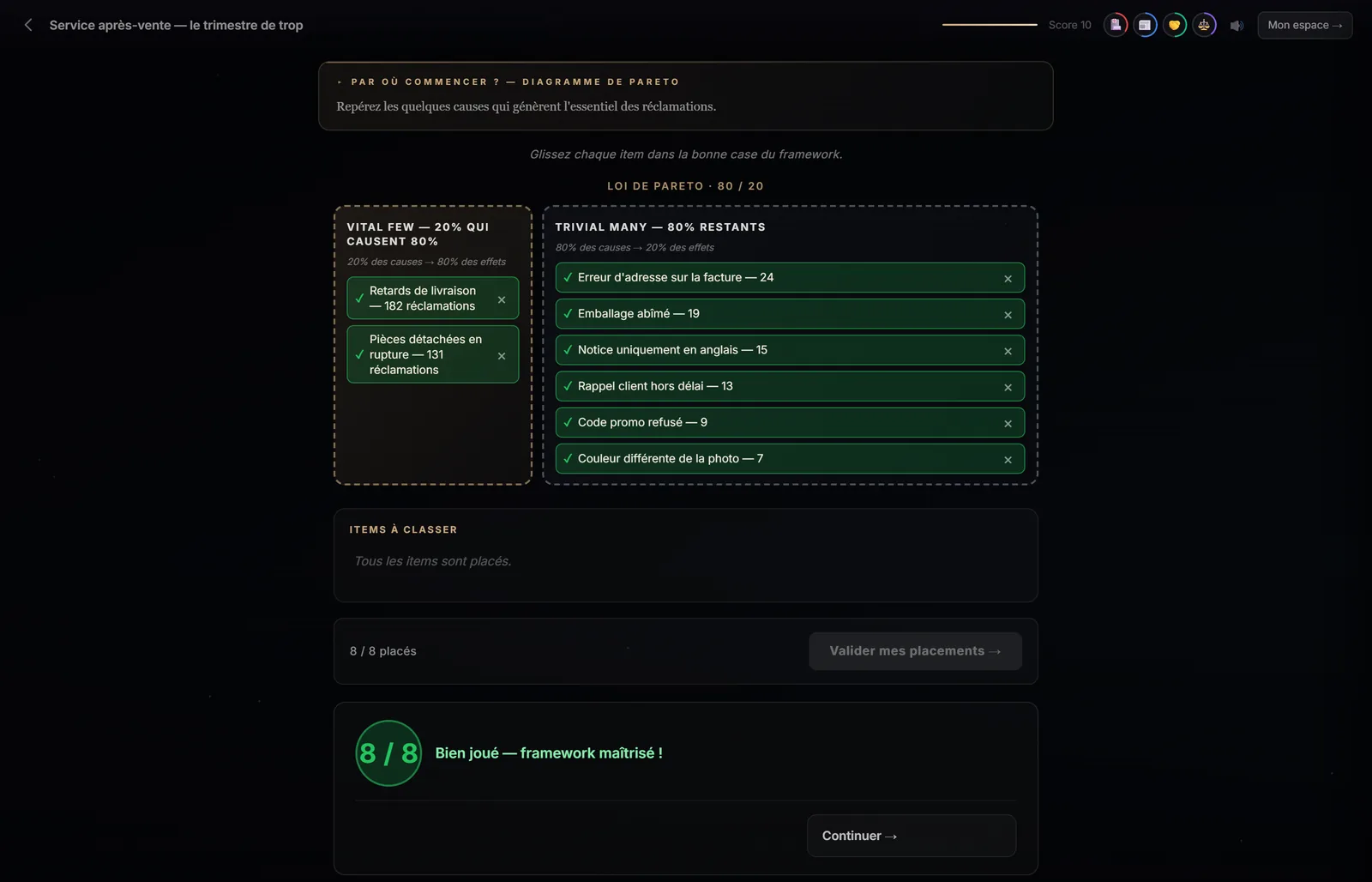
The Pareto principle, or 80/20 rule, observes that a small share of causes often produces the largest share of effects: for example, a handful of reasons account for most complaints. The Pareto chart separates these decisive causes (the vital few) from the many secondary ones (the trivial many). In an Immersio serious game, learners sort quantified causes between these two zones, then decide where to start.
At a glance
- Origin
- Vilfredo Pareto (economist, late 19th century); Joseph M. Juran (quality).
- Principle
- A minority of causes produces the majority of effects.
- Zones
- Vital few (the decisive causes) · Trivial many (the rest).
- Skills
- Data analysis, prioritisation, problem solving.
- Audiences
- Quality, customer service, production, logistics, maintenance.
What is the Pareto principle?
It is named after the Italian economist Vilfredo Pareto, who observed in the late 19th century that a small part of the population owned most of the land in Italy. In the 20th century, quality expert Joseph M. Juran turned it into a management principle: among the causes of a problem, a minority, the vital few, weighs far more than all the others, the trivial many.
“80/20” is an image, not a law: the real proportion can be 70/30 or 90/10. What matters is the imbalance, and the decision it enables: tackle the decisive causes first.
Why practise Pareto in a serious game?
Because the rule is easy to understand and hard to apply. Under pressure, people deal with whatever shouts loudest, whatever is most recent, or whatever is quickest to fix. The Pareto scene forces learners to look at the data before acting: they receive quantified causes drawn from the situation, and must isolate those that explain most of the problem.
What are the most common mistakes?
- Taking 80/20 literally, and insisting on exactly 20% of causes.
- Confusing frequency with severity. A rare but very costly incident can weigh more than a frequent, minor one: you have to choose what you count.
- Starting with the easy causes. Fixing six small problems feels like progress without changing the result.
- Analysing without data. A Pareto “by feel” simply reproduces the intuitions it was meant to test.
Which courses should use Pareto?
- Quality and continuous improvement: causes of non-conformity, scrap, customer returns.
- Customer and after-sales service: complaint reasons, causes of dissatisfaction.
- Production, maintenance, logistics: recurring breakdowns, delays, picking errors.
- Management: choosing the two projects that matter on a limited budget.
Create a serious game for after-sales service managers. The learner takes over a department that received 400 complaints last quarter, with an exhausted team and a budget limited to two projects. They must isolate the decisive causes in a Pareto chart, then convince their management and team to focus efforts on them. Gauges: customer satisfaction, team workload, costs.
Paste it into the studio once your account is created, then adapt it to your audience. Scenarios are generated in French.
The limits of the Pareto principle
It tells you where to focus effort, not how to fix the cause. It also assumes the data is reliable and that you are counting the right thing. After the Pareto scene, follow up with a decision (consequence-based multiple choice) or a dialogue where the learner has to defend their priorities.
Frequently asked questions
Is the 80/20 rule always true?
No. It's a frequent observation, not a law: the real split varies from one situation to another. What usually holds is the imbalance between a few decisive causes and many secondary ones.
Who came up with the Pareto principle?
It is named after the economist Vilfredo Pareto, who observed this kind of unequal distribution in the late 19th century. Joseph M. Juran later generalised it to quality management as “the vital few and the trivial many”.
How does the Pareto scene work on Immersio?
Learners receive causes, often quantified, and split them between two zones: the decisive causes and the secondary ones. On submitting, each placement is confirmed or corrected, with an explanation of the expected zone.
Create your first scenario
A training provider account gives you the studio, the scene formats and all four matrices. 7-day free trial, no credit card required, with 3 scenario generations to judge the result on your own topic. Scenarios are generated in French.
Create a training provider accountPrefer to compare first? See pricing · How it works